

Throughout the daily use of a mobile device , the need to free up storage is inevitable. Memory fills up quickly due to the enormous amount of data we download, constant app updates, and the incessant flow of files sent through messaging applications. Sometimes, deleting a couple of photos isn't enough; a complete ROM cleanup is necessary , either manually or using specialized tools.
Cleaning any device is vital, not only to free up space for new downloads but also to lighten the system load . Regular maintenance is essential to prevent the device from slowing down or experiencing unexpected app crashes. It's advisable to use a smartphone optimizer at least every two to three weeks, focusing on removing duplicate files and cleaning up residual data from the Android system.

It's essential to understand the difference between storage and memory . Storage is the physical space where you save your permanent data (photos, music, videos), while RAM is where the system's active processes run. When storage is nearly full, the Android system struggles to manage virtual memory, which degrades overall performance. Below, we'll show you several tricks to free up space on Android that work on any brand or model, allowing you to save more multimedia content and important documents.
Remove apps from your device

Although it may seem obvious, removing unused apps is the fastest way to free up gigabytes of storage space. Many apps accumulate data in the background that consumes valuable space. To manage this, you can use the built-in uninstaller or the system optimizer, which allows you to delete residual folders that sometimes remain after a simple uninstallation.
The key is to do a critical review: if you haven't opened an app in the last three months, it's probably unnecessary. Uninstalling apps one by one can be tedious, so there are quick ways to optimize this process, such as archiving apps on Android to save space.
- Quick method: Press and hold the app on the home screen, drag it to the trash (or select the information icon), and confirm the action. uninstall.
- Detailed method: Go to Settings > Apps > All appsHere you can see exactly how much space each one takes up. Select the app and press the button. uninstall.
- Managed via Google Play: Open the Play Store, tap your avatar, go to Manage apps and device and select the installed apps tab. Sort by size (GB in use) to eliminate the heaviest ones at once.
Remove Bloatware and System Apps
Many manufacturers and carriers include pre-installed apps (bloatware) that can't be uninstalled using the standard method. These apps consume resources and storage space with their automatic updates. While you can't completely remove them, you can disable them.
To do this, go to Settings > Applications , select the system app you don't need, and tap Disable . This will stop its background processes and reduce its size to a minimum. For advanced users, you can use ADB (Android Debug Bridge) commands from a computer to uninstall system packages, although caution is advised to avoid affecting the stability of your device.
Delete files from the downloads folder

The Downloads folder is one of the biggest sources of digital clutter. It stores everything from small PDFs to APK installers and large videos that we forget to delete. Cleaning it every two or three months can free up between 1 and 10 GB of space.
To clean this section, follow these steps:
- Look for the app called Files or My Files (the icon is usually a folder).
- Within the browser, navigate to the category Downloads or Files Received.
- Select the files you no longer need or use the option select all.
- Confirms final deletion.
Don't forget to also check the Bluetooth received files folder , which often goes unnoticed and accumulates old content.
Comprehensive management of WhatsApp and messaging
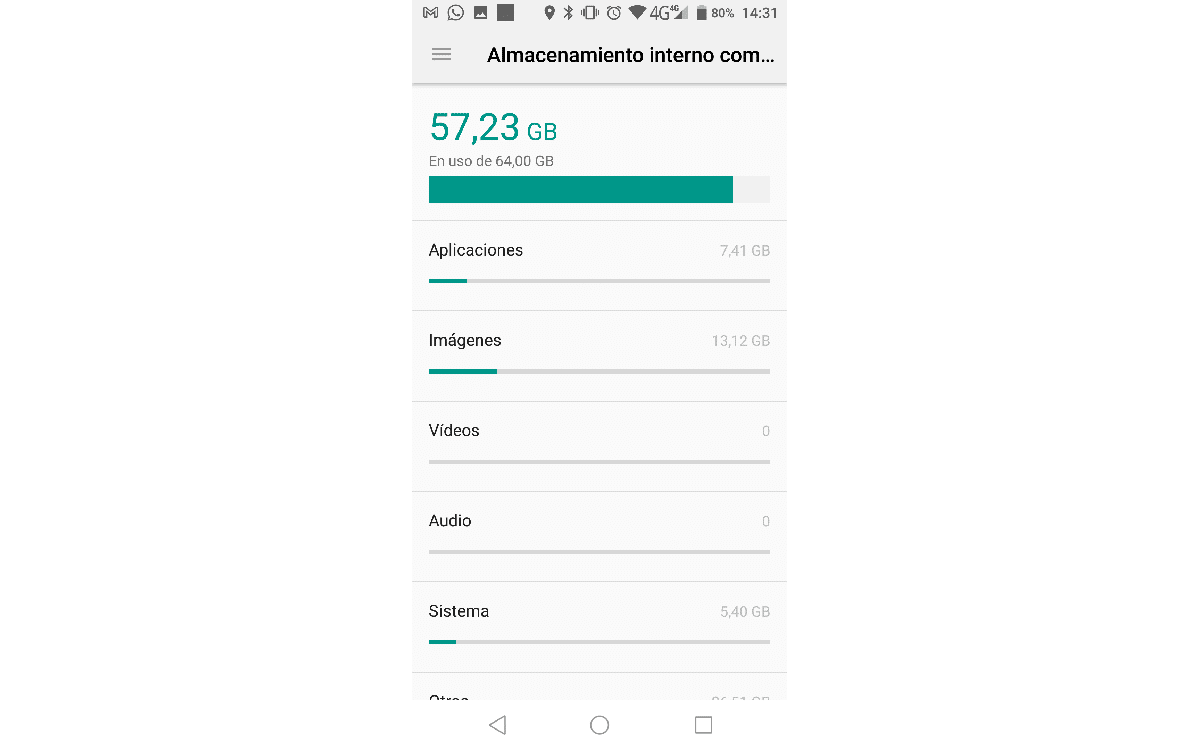
WhatsApp is one of the most storage-intensive apps . Unlike other apps, WhatsApp saves copies of everything you send and receive. For a real cleanup, simply deleting the chat isn't enough; you need to go to the root of your files.
Media cleanup: Use your file manager and navigate to Internal storage > Android > Media > com.whatsapp > WhatsApp > Media . Inside, you'll find folders for images, videos, and audio. Pay special attention to the Sent folder , as it contains duplicates of every file you've shared with others.
Database cleanup: WhatsApp creates daily local backups. If you already have backups enabled on Google Drive , the files in the Databases folder are redundant. You can delete the oldest files and keep only the most recent one.
Preventative measure: To prevent the problem from recurring, disable automatic downloads . Go to Settings > Storage and data and uncheck all the automatic download boxes for mobile data and Wi-Fi. This way, you'll be able to choose which files to download manually.
Clear app data and cache

The cache stores temporary data (such as profile pictures or website snippets) to help apps load faster. However, browsers like Chrome or social media platforms like TikTok and Instagram can accumulate gigabytes of outdated data.
It's important to differentiate between clearing cache and clearing data :
- Clear cache: Delete temporary files without affecting your session. The app may take a little longer to load the first time, but you'll recover space.
- Delete data/storage: Leave the app as if it were just installed. Accounts, saved games, and personal settings will be deleted.

Steps to perform this: Go to Settings > Apps , select the app using the most storage, and then tap on Storage . From there, tap on Clear cache . It is recommended to do this manually every one or two months instead of using automatic apps that might close critical processes.
General cleanup with Google's Optimizer and Files tools
If you prefer a centralized solution, your phone's native optimizer is the best option because it's fast and integrated into the system. However, there are very powerful external tools like CCleaner or, preferably, Google Files.
Google Files is especially useful because it analyzes your device and suggests deleting:
- Junk files: Remains of installations and temporary system components.
- Duplicate files: Analyze the size and date to find exact copies even if they have different names.
- Photos backed up: Lets free up space with Google Photos removing the local copy of images that are already safe in the cloud.
- large files: Identify large videos or documents that are slowing down memory.
Advanced tricks to gain extra space
Moving apps to the microSD card: If your device supports expandable storage, you can move some apps to the microSD card. Go to Settings > Apps > Storage and, if the app allows it, tap Change to move it to the SD card.
Disable AICore: On many modern devices, there's a process called AICore related to Gemini Nano AI. If you don't use offline AI features (like note summaries or local transcriptions), you can disable it. Go to Settings > Apps > Show system , find AICore , and select Disable and Uninstall updates . This can free up to 7 GB of storage and RAM.
YouTube cleanup: If you have YouTube Premium, check the Downloads section in your library. High-resolution videos take up a lot of space that we often forget to clean up after watching them.
Emptying the Recycle Bin: Remember that when you delete a photo, it doesn't disappear immediately, but goes to the Recycle Bin for 30 days. To free up space instantly, open the Gallery or File Manager , go to the Recycle Bin , and select Empty.
Cloud storage: To avoid relying on physical hardware, use cloud storage services. This allows you to move your largest files off your phone and protect them with external backups.
Maintaining your smartphone's digital hygiene is an ongoing process. By applying these techniques monthly, you'll not only avoid the annoying "storage full" warning, but you'll also extend your device's lifespan, optimize data read and write speeds, and ensure that security updates install smoothly. A device with free space is a smoother, more efficient device, better able to handle the demands of modern apps.

Table of Contents


