

When buying a new Android phone, the device's screen plays a crucial role . It's not just the size of the panel, but also the underlying technology that defines how we perceive colors, contrast, and how power is managed. Currently, the market is mainly divided between two major architectures: AMOLED and IPS displays . Although both terms are common in technical specifications, they represent completely different engineering philosophies that directly affect the user experience.
Below, we thoroughly analyze these two types of technology so you can determine which is better or which to choose based on your usage. There are critical differences between an AMOLED and an IPS screen , ranging from the chemical composition of the materials to how light is managed—factors that must be considered when buying an Android smartphone, tablet, or even industrial devices.
It's crucial to understand that the screen is the component we constantly interact with; it's our window to the operating system. Therefore, choosing the right panel isn't just a matter of aesthetics, but also of functionality, eye health , and energy efficiency. Depending on whether your primary use is gaming, graphic design, streaming, or working outdoors, one technology will be superior to another.
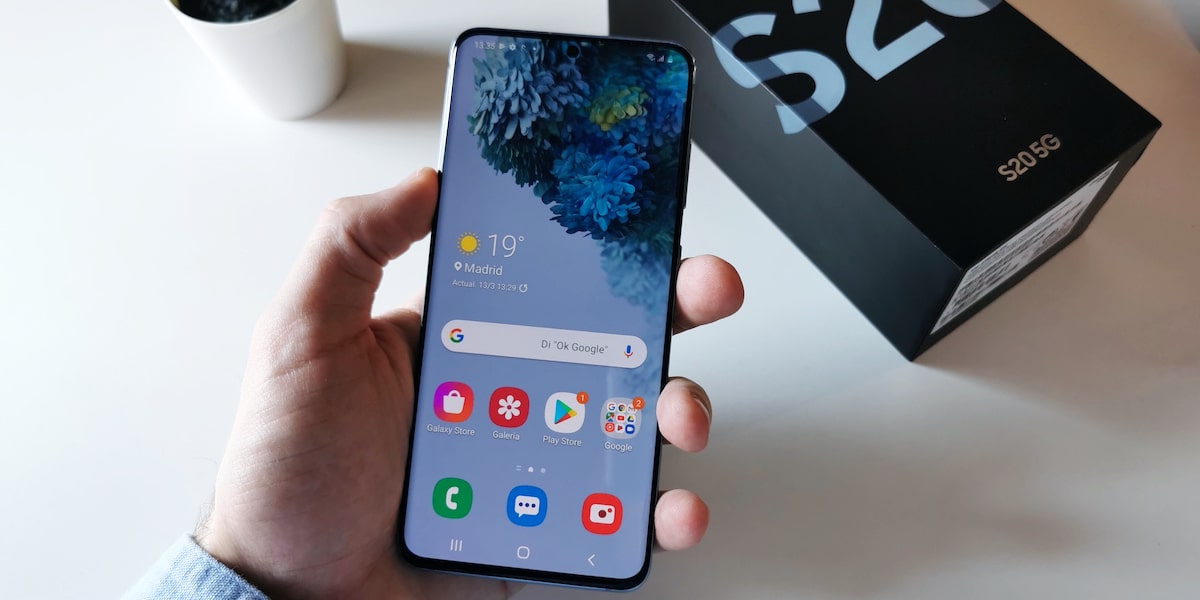
What is an AMOLED display?
AMOLED stands for Active Matrix Organic Light-Emitting Diode. Unlike traditional displays, this technology is self-emissive . This means it's made of organic materials that emit their own light when an electric current is applied, eliminating the need for an external light source or backlight.
In an AMOLED panel, each pixel operates independently . This feature is key to its efficiency: when the image needs to display black, the corresponding pixels simply turn off completely. With no light emission in those areas, pure, deep blacks are achieved , which boosts the contrast ratio to virtually limitless levels, making colors pop with vibrant intensity.
In addition to their visual quality, AMOLED panels are extremely thin and flexible . Since they don't require a backlight layer, the module is much thinner, allowing manufacturers to design more compact phones or even create foldable devices . This structure also allows for the integration of ultrasonic or optical fingerprint sensors directly under the screen glass.
It's important to mention variants like Super AMOLED , where the touch layer is integrated directly into the screen instead of being a separate layer, reducing reflections and improving energy efficiency. Some manufacturers have also implemented the PenTile (RGBG) matrix , which uses fewer blue subpixels to extend the panel's lifespan, although at low resolutions it might slightly affect text sharpness.

What is an IPS screen?
The IPS panel is an advanced type of LCD (Liquid Crystal Display). To understand it, we must first know that LCDs are liquid crystal displays that do not emit their own light, but rather act like a blind that allows or blocks light from an LED backlight located behind the panel.
IPS stands for In-Plane Switching . This technology emerged as an evolution of traditional TFT-LCD panels to correct their most serious shortcomings: limited viewing angles and poor color reproduction. In an IPS display, the liquid crystals are aligned parallel to the panel's surface, allowing light to pass through more directly and uniformly.
Thanks to this orientation, IPS displays offer very wide viewing angles ; that is, the image doesn't distort or change colors even when viewed from the side. Furthermore, they are known for offering more natural and accurate color reproduction , avoiding the excessive saturation sometimes seen in AMOLED displays, making them ideal for professionals such as photographers or designers.
Another strength is their performance in direct sunlight . Thanks to their powerful backlight, they typically maintain superior readability in bright outdoor conditions, preventing the image from washing out or disappearing. While more expensive than basic TFT panels, they are still cheaper to produce than AMOLED, making them a common choice for mid-range and professional monitors.
Advantages and disadvantages of AMOLED screens
To decide between AMOLED and IPS, it's vital to analyze where each technology excels and what its weaknesses are. AMOLED displays represent the cutting edge of visual technology, but they are not without technical compromises.
Advantages of AMOLED:
- Infinite contrast: By turning off the pixels for black, an unparalleled visual depth is achieved.
- Selective energy efficiency: Battery consumption is drastically reduced when using "dark mode", as a large part of the screen remains off.
- Vibrant Colors: They offer a saturation that makes multimedia content (movies, games) more impactful.
- advanced design: They are thinner and allow the creation of curved or foldable screens.
- Response times: They generally offer a faster pixel transition, reducing the ghosting effect in motion.
Disadvantages of AMOLED:
- Risk of burn-in: Because they use organic materials that degrade, if a static image (such as the status bar) is displayed for thousands of hours at maximum brightness, permanent "marks" may remain.
- High cost: Its manufacture is more complex and expensive, which increases the final price of the device.
- Reduced lifespan: Organic components lose their shine faster over time than liquid crystals.
- Perceived brightness: Although they have improved, some panels may present visibility difficulties under extreme sunlight compared to high-end IPS panels.

Advantages and disadvantages of IPS displays
The IPS panel is the choice for reliability and balance. It remains the preferred technology in many industrial and professional environments due to its long-term stability.
Advantages of IPS:
- Chromatic accuracy: The colors are more true to life, without the artificial saturation of OLEDs.
- Extreme Durability: They do not suffer from image burn-in, making them ideal for devices that display static menus for years.
- Constant brightness: The use of LED backlighting allows for a brighter white and better visibility outdoors.
- Stable viewing angles: The consistency of the color remains almost intact regardless of the viewing angle.
- Competitive price: They allow you to obtain high-quality screens on mid-range and low-end devices.
Disadvantages of IPS:
- Grayish blacks: Because the backlight is always on, the black is never pure; there is always a slight leakage of light that makes it appear dark gray.
- Constant energy consumption: Backlighting consumes energy regardless of whether the image is white or black.
- Greater thickness: Because it requires several layers (backlighting, diffusers, liquid crystal), the module is physically thicker.
- Lower contrast: The difference between the brightest and darkest points is much smaller than in AMOLED.
AMOLED vs IPS: Detailed Comparative Analysis
To delve deeper into the choice, we must look beyond the lists of pros and cons and analyze how these technologies affect real-world situations of everyday and professional use.
1. Impact on the Battery
On an IPS screen, battery life is almost the same whether you're looking at a blank page or a nighttime image, since the backlight LEDs are always on. In contrast, the AMOLED screen is the king of the energy savings in dark interfacesIf you're a user who activates dark mode in all your apps, you'll notice that your smartphone's battery life increases significantly, allowing you to apply other features. tricks to improve autonomy.
2. Image Quality and Content
If your priority is the multimedia consumption (Netflix, YouTube, Gaming), AMOLED is superior thanks to its dramatic contrast and vibrant colors that create an immersive experience. However, if you work in photo or video editing, an IPS is preferable because it doesn't "trick" the eye with saturated colors, allowing you to make precise color corrections that will look the same on other devices.
3. Use in Professional and Industrial Environments
In the B2B world, such as human-machine interfaces (HMIs), medical panels, or vehicle systems, the IPS TFT screen This is the norm. This is because these devices typically display static icons and menus for thousands of hours. Using AMOLED on an industrial control panel would be a mistake, as the risk of burn-in of static elements is extremely high. IPS offers a long-term operation and a more mature and standardized module supply.
4. Ergonomics and Design
The thickness of the display module affects the chassis design. AMOLED displays allow for narrower bezels and "curved" designs that hug the sides of the phone. IPS displays, being bulkier, usually require slightly wider bezels, although the difference has narrowed in recent years.

Which one should you choose based on your user profile?
There is no single "best" screen, but rather one that is best suited to each need. Here we help you decide based on your usage patterns:
Choose AMOLED if:
- Looking for the better visual quality to watch movies and play video games.
- Do you value an ultra-thin design, curved screens, or foldable devices?
- You mainly use your mobile phone indoors or in environments with controlled lighting.
- You are a heavy user of dark mode to maximize battery life.
- You don't plan to keep the device for more than 3 or 4 years (thus avoiding the problem of organic wear and tear).
Choose IPS if:
- You do creative worksuch as graphic design, photo retouching, or video editing.
- You spend a lot of time using the device under the direct sunlight.
- You're looking for a reliable device that maintains the same image quality for many years without the risk of burn-in.
- You have a tight budget and are looking for the best value for money in the mid-range.
- You need a display for a professional environment where color stability is critical.
In today's market, high-end Android devices have almost unanimously opted for AMOLED displays due to their "wow" factor and design versatility. However, IPS technology remains the backbone of professional monitors and a large portion of productivity and mid-range devices, demonstrating that stability and precision continue to be immensely valuable compared to visual impact.
The final choice depends on whether you prioritize deep contrast and modern design or natural color and long-term durability. Regardless of your choice, both technologies have matured enough to offer an excellent experience, provided they meet the real demands of your daily life and the environment where you use your device most.
Table of Contents
